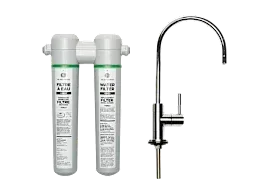
Is Your Tap Water Safe? The Ultimate Guide to Water Filter Technologies
The Invisible Threat: Why Your Tap Water Needs a "Bodyguard" (And Which One to Hire)
You turn on the tap, fill your glass, and drink. It looks clear. It smells fine. But do you really know what’s in it?
While water utilities work hard to treat public water, the journey from the treatment plant to your kitchen sink is long and perilous. Aging pipes can leach lead. Treatment processes leave behind disinfection byproducts. And sometimes, new contaminants enter the system that utilities aren't even testing for yet.
You are problem-aware. You know you need a filter. But walking down the aisle at the hardware store (or scrolling through Amazon) is overwhelming. Carbon block? Reverse Osmosis? Ion Exchange?
At Your Dirty Water, we turn dirty water into pure peace of mind. We’ve analyzed the science so you don't have to. Below, we break down the primary filtration technologies to help you decide which one will protect your family best.
The "Dirty" Truth: Why You Can't Rely on the Utility Company
The water leaving the plant might meet federal standards, but that doesn't always mean it's "safe" by the time it hits your glass.
The Distribution Problem: Water travels through miles of infrastructure. If your home or city has old pipes, lead can flake off into your drinking supply.
The Chemical Cocktail: To kill bacteria, utilities use chlorine or chloramine. These chemicals create disinfection byproducts (DBPs) which have been linked to long-term health issues.
The Unregulated: Agricultural runoff (Nitrates) and industrial chemicals often slip through standard municipal treatment.
To stop these, you need a barrier. But not all barriers are created equal.
Technology #1: Carbon Filtration (The First Line of Defense)
This is what you see in most pitcher filters and fridge units. It uses activated carbon (often from coconut shells or wood) to trap contaminants as water flows through.
The Two Types:
Granulated Activated Carbon (GAC): Loose grains of carbon. Water flows through quickly.
Verdict: Good for taste, but weak on heavy contaminants.
Carbon Block: High-pressure blocks of carbon.
Verdict: Superior. The dense structure slows the water down, increasing surface area contact. This removes a much broader range of chemicals.
Why Choose Carbon?
If your main concern is Taste, Odor, and Chlorine, this is your best bet. High-quality carbon blocks can also reduce lead and VOCs (Volatile Organic Compounds).
The Downside:
Carbon is generally ineffective against the "scary stuff" like Nitrates, Perchlorate, and 1,4 Dioxane.
Technology #2: Reverse Osmosis (The "Gold Standard")
If you are a prepper, a parent, or live in an area with industrial runoff, Reverse Osmosis (RO) is the heavy artillery.
How it Works:
RO systems don't just filter; they purify.
Pre-Filter: Carbon removes chlorine and VOCs.
The Membrane: Water is forced under pressure through a semi-permeable membrane. This barrier is so tight that it blocks contaminants larger than a water molecule.
The Result: It effectively removes Arsenic, Hexavalent Chromium, Nitrates, and Perchlorate.
The "Wasted Water" Reality:
RO is intense. The process requires 3 to 5 gallons of water to produce just 1 gallon of pure water. The rest is flushed down the drain.
The Mineral Issue:
RO works so well it strips healthy minerals (calcium, magnesium) along with the toxins.
The Fix: Look for an RO system that includes a Remineralization Cartridge or add mineral drops yourself to improve taste and health benefits
Technology #3: Ion Exchange (The Water Softener)
You usually find this in whole-house systems designed to treat "Hard Water."
The Mechanism:
It swaps calcium and magnesium ions (which cause lime scale) for sodium ions.
Best For: Protecting your plumbing and appliances from scale buildup.
Worst For: Drinking water if you are on a low-sodium diet or watering your plants (salt kills plants!).
Note: Ion exchange does not significantly reduce chemical contaminants like pharmaceuticals or pesticides.
Technology #4: Whole House Filters
Installed where the water line enters your home, these ensure every tap flows with filtered water.
Pros:
Convenience (filtered water in the shower = better skin/hair).
Protects appliances from iron and sediment.
Cons:
Bacteria Risk: Removing chlorine at the entry point allows bacteria to grow in your home's internal pipes.
Cost: Expensive to install and maintain.
Waste: Whole house RO systems waste a massive amount of water.
Verdict: Unless you have specific well-water issues (like high iron or radiologicals), a Point-of-Use (Countertop or Under-sink) filter is usually safer and more cost-effective for drinking.
